
edgeful alternatives: how to choose the right trading data platform (2026)
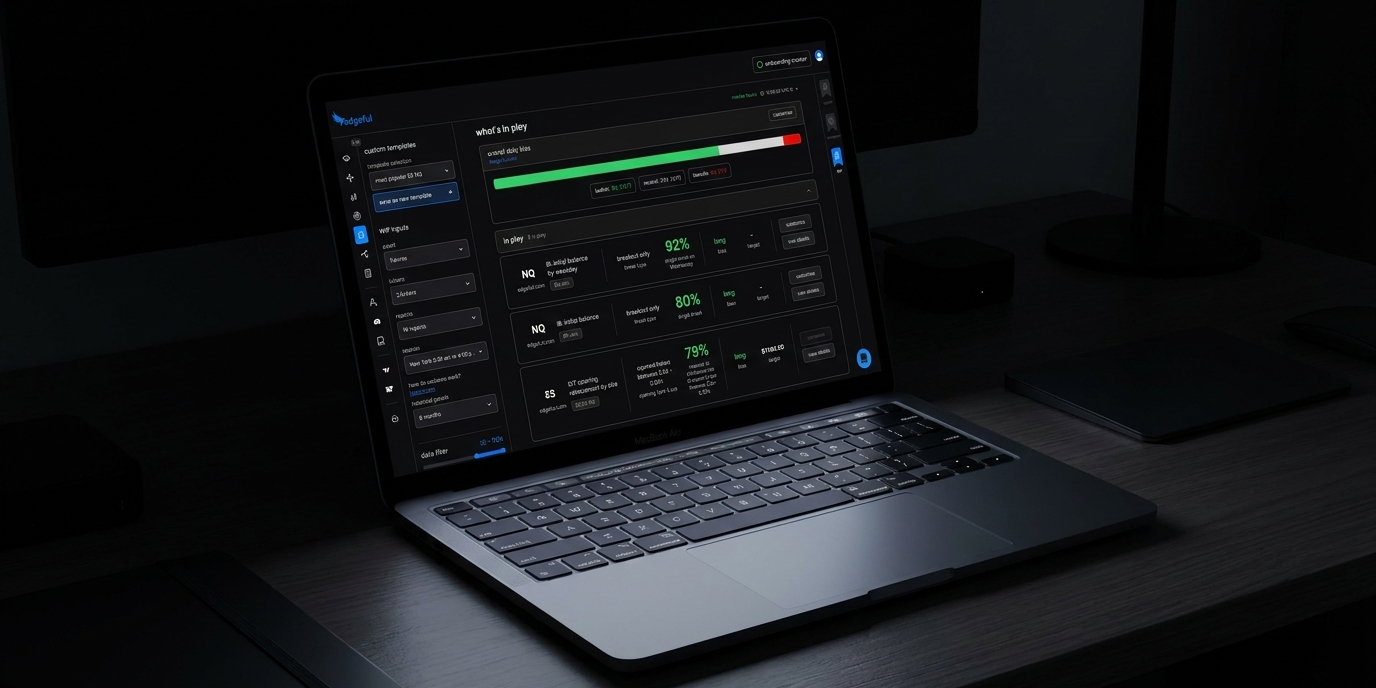
if you're searching for edgeful alternatives, you're probably trying to figure out whether edgeful is the right tool for your trading, or whether something else fits better. that's a fair question.
we're not going to trash other tools here. what we will do is lay out what edgeful does, what it doesn't do, and what to look for when evaluating edgeful alternatives so you can make your own decision.
table of contents
- what edgeful actually does
- what to look for in edgeful alternatives
- edgeful vs general trading tool categories
- where edgeful fits and where it doesn't
- what edgeful doesn't do (and what alternatives might)
- key takeaways
what edgeful actually does
before comparing edgeful alternatives, you need to know what edgeful is. here's the quick version:
- 150+ probability reports. historical data on how often specific trading setups have played out, filtered by ticker, session, timeframe, and day of week
- subreports. deeper filters on every report: by weekday, by size, by spike, by retracement, by levels
- what's in play dashboard. all your favorite reports consolidated into one view per ticker with live updates
- screener. scan up to 49 tickers across 4 reports simultaneously
- edgeful AI. deep research tool that reads your report data and answers natural language questions (launched february 2026)
- 8 automated algo strategies. connect to your broker (Tradovate, Rithmic, ProjectX) and execute trades automatically
- algo analyzer. Monte Carlo simulation, drawdown analysis, optimization, prop firm pass testing
- 50+ TradingView indicators. plot report levels on your charts. included for all members
- 12+ NinjaTrader indicators
edgeful covers futures, stocks, ETFs, forex, and crypto. pricing starts at $33/month (annual essential) or $199/month (annual all access with algos).
what to look for in edgeful alternatives
if you're evaluating trading data tools, here's what matters:
data transparency
can you see exactly what the numbers are based on? edgeful shows you the ticker, session, timeframe, lookback period, and sample size for every number. some tools give you a "score" or "signal" without telling you what's behind it. if you can't see the data, you can't trust it. we have over 8+ years of historical data that you can analyze and apply to your trading strategies.
customization depth
can you filter the data to match your specific trading style? edgeful lets you filter by session, day of week, setup size, and custom date ranges. if a tool only shows you one number with no way to break it down, you're getting a blunt instrument.
asset and market coverage
does it cover what you trade? edgeful covers futures, stocks, ETFs, forex, and crypto. some tools only cover one asset class. make sure the alternative you're evaluating actually covers your markets.
indicator integration
does it work with your charting platform? edgeful provides 50+ TradingView indicators and 12+ NinjaTrader indicators as part of the subscription. some tools require you to manually reference data on a separate screen.
automation capabilities
do you want automated execution? edgeful offers algo strategies with broker connections. not every trader needs this, but if you do, check whether any edgeful alternatives offer live broker integrations with automated execution.
research tools
can you ask questions about the data? edgeful AI reads your report data and finds patterns across multiple reports. this is a relatively new capability in the trading tool space.
edgeful vs general trading tool categories
when searching for edgeful alternatives, you'll find tools that fall into different categories. here's how edgeful compares to each:
vs scanners and screeners
most scanners look for real-time conditions (high volume, price breakouts, unusual options activity). edgeful is different. it shows you historical data on how often those conditions have led to specific outcomes.
edgeful does have a screener, and it screens for data-backed setups throughout the trading session. you choose your tickers and reports, and the edgeful screener will show you the real time bias you should have based on the historical data and live price action.
vs charting platforms
edgeful is not a charting platform. it doesn't replace TradingView, NinjaTrader, or your broker's charts. it works alongside them. the TradingView indicators plot edgeful levels on your existing charts.
if you're looking for a charting tool, edgeful alternatives in that category serve a different purpose entirely.
vs signal services
edgeful doesn't send you trade signals. it shows you historical data and lets you build your own bias. "NQ gap downs fill 76% of the time in the NY session over the last 6 months" is data, not a signal. you decide whether to trade it.
if you want someone to tell you exactly when to buy and sell, that's a different product category.
vs algo platforms
some algo platforms let you build strategies from scratch with code. edgeful algos are pre-built strategies based on specific setups (ORB, IB, engulfing candle) that you customize with parameters. although we are building the capability to code your own strategies using edgeful AI, we're not quite there yet. if you're a programmer who wants full coding control, edgeful is more structured. if you want data-backed strategies that you can customize without code, edgeful fits well.
vs AI trading tools
many "AI trading" tools use AI to generate signals or predictions. edgeful AI is different. it doesn't predict anything. it reads your actual report data and finds patterns in it. it's a research tool, not a prediction engine. you can use it to find the nitty gritty pieces of edge that otherwise would take you hours to do by hand.
where edgeful fits and where it doesn't
edgeful fits best for
- futures day traders who want historical data on specific setups
- traders who use TradingView and want statistical levels plotted directly on their charts
- algo traders who want automated execution based on data-backed strategies
- prop firm traders who need validated strategies with drawdown analysis and pass testing
- traders who are tired of guessing and want to replace gut feel with numbers
edgeful doesn't fit well for
- options traders. no options chains, no GEX, no gamma exposure. if options are your primary instrument, edgeful alternatives in that space will serve you better
- pure chartists who don't use data. if you trade exclusively off chart patterns without statistical data backing, edgeful's value proposition may not resonate
what edgeful doesn't do (and what alternatives might)
being transparent about gaps:
- no options data. no GEX heatmaps, gamma exposure, unusual options activity, or options flow. if this is critical to your trading, you'll need a specialized tool
- no live orderflow. no real-time order book, no volume delta, no footprint charts. edgeful is historical data, not live tape
- no built-in charting. you need TradingView, NinjaTrader, or another charting platform. edgeful provides the data and indicators, not the charts
- no trade journal. while the algo analyzer tracks trade performance, it's not a general-purpose journaling tool.
tools that serve these specific needs are complementary to edgeful, not replacements for it.
key takeaways
- when evaluating edgeful alternatives, look for data transparency, customization depth, market coverage, indicator integration, automation capabilities, and research tools
- edgeful provides 150+ reports, automated algos, AI research, 50+ TradingView indicators, and a screener in one platform
- edgeful fits best for futures day traders, TradingView users, algo traders, and prop firm traders who want data-backed decision making
- edgeful doesn't cover options data, live orderflow, or charting. tools in those categories are complementary, not replacements
- the best approach for most traders is edgeful alongside their existing charting and execution tools, not instead of them
trading involves risk. past performance and historical data do not guarantee future results. the statistics referenced in this post are based on historical data and may not reflect future market conditions. always trade with proper risk management.
