
outside days report: what it measures and how traders use it
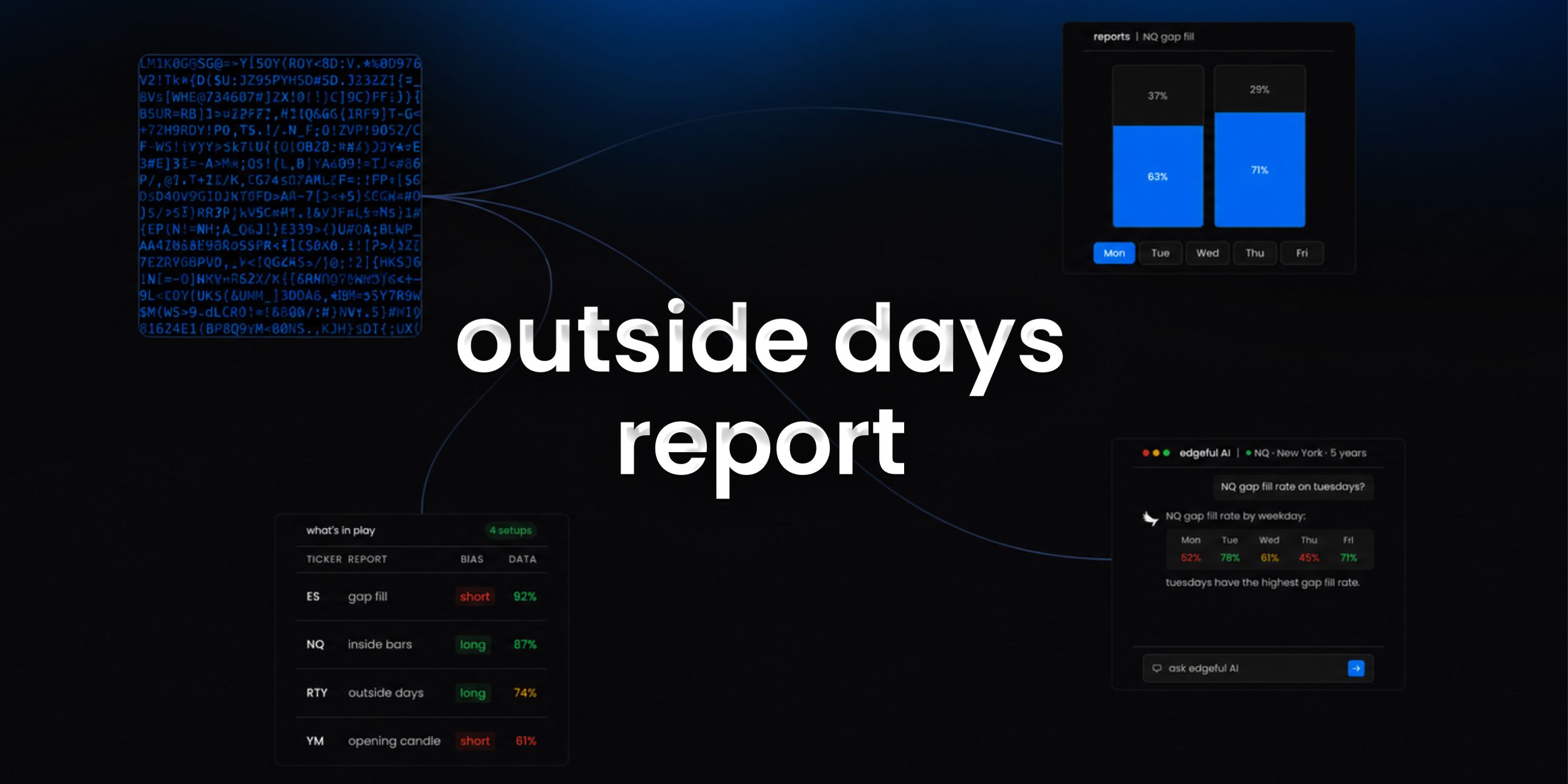
the outside days report on edgeful identifies trading days where the open gaps above or below the previous day's range, classified as bullish or bearish outside days. it tracks whether these gaps continue in the gap direction or reverse back into the previous range.
this is one of the 150+ reports available on the edgeful platform. here's how it works, what the data shows, and how traders use it.
table of contents
- what the outside days report measures
- how the calculation works
- available subreports
- how traders use outside days data
- combining outside days with other reports
- key takeaways
what the outside days report measures
the outside days report identifies trading days where the open gaps above or below the previous day's range, classified as bullish or bearish outside days. it tracks whether these gaps continue in the gap direction or reverse back into the previous range.
the report is available for futures, stocks, ETFs, forex, and crypto. you can filter by ticker, session (NY, London, Asian, full globex, or custom), and lookback period (1 month to 5+ years).
how the calculation works
the outside days report identifies trading days where price opens completely outside the previous day's range.
- a bullish outside day occurs when the market opens above the previous day's high
- a bearish outside day occurs when the market opens below the previous day's low
- the report tracks whether price continues in the gap direction or reverses back into the prior day's range
- continuation vs. reversal percentages are calculated for both bullish and bearish outside days
- this gives you a statistical read on how likely the gap is to hold vs. get filled
available subreports
the outside days report has 4 subreports for deeper analysis:
by close. identifies bullish and bearish outside days in historical price data and analyzes their closing performance relative to previous day levels. Bullish outside days open above previous high, bearish outside days open below previous low. Tracks whether closes finish above or below key previous levels and calculates performance statistics.
by size. analyzes outside day patterns where the current day opens beyond the previous day's high or low range, categorizing them by gap size percentage and tracking reversal behavior. Calculates frequency and momentum statistics for bullish and bearish outside days across seven predefined size categories ranging from less than 0.1% to 1.5% and above.
by spike. identifies outside days where the current day opens above the previous day's high (bullish) or below the previous day's low (bearish), then measures the spike continuation before price retraces back to test the previous day's range. Calculates spike percentages and absolute sizes for both bullish and bearish outside day patterns, providing statistics on average and maximum spike measurements.
by weekday. analyzes price gaps where the open price is completely outside the previous day's trading range, categorizing them as bullish outside days (open above previous high) or bearish outside days (open below previous low). Tracks reversal patterns and calculates statistics grouped by weekday for both market types.
how traders use outside days data
- identifying potential breakout days when price gaps significantly above or below previous trading ranges
- assessing gap continuation probability based on historical reversal rates for similar price gaps
- setting stop losses below previous day high for bearish gaps or above previous day low for bullish gaps
- determining position sizing based on gap reversal statistics showing likelihood of price returning to previous range
- planning intraday strategies around gap fill probability using continuation versus reversal percentages
the data doesn't tell you to trade. the outside days report tells you the historical performance of the setup in front of you. what you do with that information is your decision.
results require customization, time, and effort. the numbers change depending on your ticker, session, and lookback period. always check the data for your specific conditions.
combining outside days with other reports
the outside days report works best when combined with other edgeful reports for confluence:
- use the what's in play dashboard to see outside days data alongside your other favorite reports in one view
- the screener lets you scan up to 49 tickers for outside days setups across 4 reports simultaneously
- edgeful AI can analyze outside days data alongside other reports and find patterns you'd never spot manually
key takeaways
- the edgeful outside days report measures identifies trading days where the opening price gaps above or below the previous day's high or low range, categorizing them as bullish or bearish outside days. tracks whether these gap days continue in the gap direction or reverse back into the previous day's range. calculates statistics on gap frequency and continuation versus reversal rates.
- available for futures, stocks, ETFs, forex, and crypto with full session, ticker, and date range filtering
- 4 subreports available: by close, by size, by spike, by weekday
- part of the 150+ reports included in the edgeful essential plan ($49/month or $39/month annual)
- works best when combined with other reports using what's in play, the screener, or edgeful AI
trading involves risk. past performance and historical data do not guarantee future results. the statistics referenced in this post are based on historical data and may not reflect future market conditions. always trade with proper risk management.
