
trading statistics software: what to look for and how traders actually use it
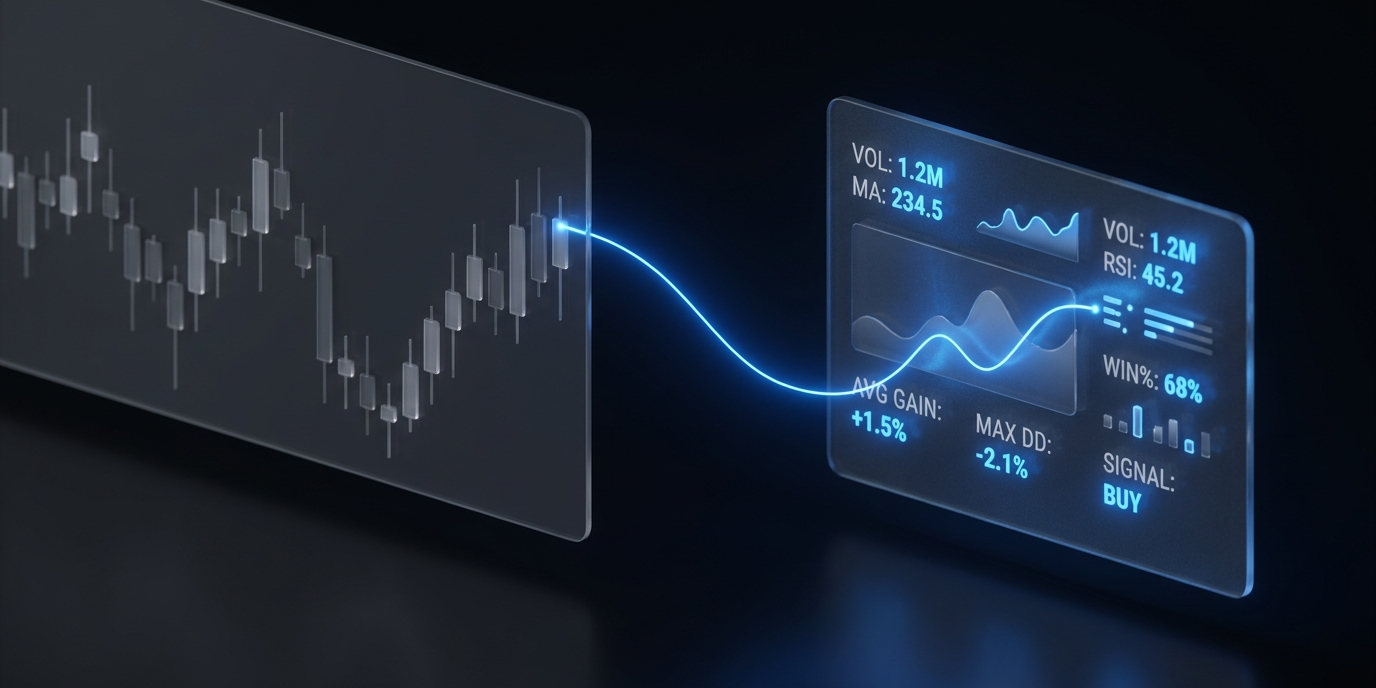
most traders make decisions based on feel. they look at a chart, see a pattern they recognize, and take the trade. when it works, they feel smart. when it doesn't, they blame the market.
trading statistics software changes that equation entirely. instead of guessing whether a setup works, you're looking at how often it's worked historically… across specific tickers, sessions, timeframes, and conditions. the data doesn't care how you feel about a trade. it just tells you what's happened before.
if you've been trading without any kind of trading statistics software, you've been making decisions without the most important piece of information: whether your setup actually has a statistical edge.
table of contents
- what is trading statistics software
- why traders need trading statistics software
- what to look for in trading statistics software
- types of trading statistics and what they tell you
- how traders use trading statistics software in practice
- trading statistics software vs. spreadsheets and manual tracking
- how edgeful approaches trading statistics
- common mistakes when using trading data software
- key takeaways
what is trading statistics software
trading statistics software is any platform that collects, analyzes, and presents market data in a way that helps traders make better decisions. at its core, it answers one question: what does the data say about this setup?
that can mean different things depending on the platform:
- trade journaling software tracks your personal trade history — win rate, average winner, average loser, performance by day of week
- market statistics platforms analyze historical market behavior — how often gaps fill, what happens after ORB breakouts, which sessions produce the most range
- backtesting software runs your strategy against historical data to simulate performance
- trading analytics software combines elements of all three — personal performance, market behavior, and strategy validation
the best trading statistics software gives you data you can actually act on. not just charts and graphs that look impressive, actual numbers that change how you trade tomorrow.
why traders need trading statistics software
there are three core reasons:
1. you don't know your numbers
most traders can't answer basic questions about their own trading: what's your win rate on longs vs. shorts? which day of the week is your best? which session produces your worst results?
without trading statistics software, these numbers don't exist. you're trading blind, making the same mistakes repeatedly because you can't see the patterns in your own data.
2. you're trading setups without historical validation
you see a setup on social media, it "makes sense," so you start trading it. but you've never checked whether it actually works over a meaningful sample size. day trading statistics show that most popular setups have dramatically different performance depending on conditions and most traders never check.
3. you can't separate skill from luck
a 5-trade winning streak feels like you've figured it out. a 5-trade losing streak feels like everything is broken. neither is necessarily true. trading statistics software gives you the sample size to separate signal from noise. 50 trades tells you something. 5 trades tells you nothing.
what to look for in trading statistics software
not all trading data software is built the same. here's what matters:
historical depth
the platform should have enough historical data to produce meaningful statistics. a few weeks of data isn't enough. you need months, ideally 6-12 months minimum, across different market conditions (trending, ranging, high volatility, low volatility).
granular filtering
the ability to filter by ticker, session, timeframe, day of week, and specific conditions is what separates useful trading statistics from generic numbers. a win rate across "all conditions" is almost useless. a win rate for "NQ gap downs during the NY session on Tuesday-Thursday over the last 6 months" is actionable.
real-time updates
markets change. trading statistics software that only shows you data from 2023 isn't helpful in 2026. the best platforms update their data continuously so you're always looking at current conditions.
clear presentation
data is only useful if you can read it quickly. look for platforms that present statistics in clean, scannable formats — not buried in complex interfaces that take 20 minutes to navigate.
actionable output
the most important question: can you take what the platform shows you and use it in your next trading session? if the answer is no, the data isn't actionable enough.
types of trading statistics and what they tell you
here are the key metrics that good trading statistics software should provide:
- success rate over time: what percentage of trades work out based on what the report is measuring. anything over 60% is usually worth diving deeper into.
- performance by session: NY, London, Asian sessions all produce different results. statistical trading that ignores session context is incomplete
- performance by day of week: some strategies perform significantly better on certain days. trading the same way Monday through Friday ignores this edge
- fill rates and target rates: for setups like gap fills, knowing how often the target gets hit is the most important number. also having the ability to customize the fill percentage — for example, half gaps vs full gaps — will allow you to build a more customized strategy.
- sample size: the number of trades or occurrences the statistics are based on. anything under 50 should be treated with caution
how traders use trading statistics software in practice
morning prep
before the market opens, check the data for today's conditions. what's the gap direction and size? what does the day-of-week data look like? what's the IB range likely to be based on recent averages?
according to edgeful data, the same setup can produce dramatically different results depending on the day. a gap fill strategy that works 70% of the time on ES on Tuesdays might only work 40% of the time on NQ on Fridays. trading statistics software shows you this before you take the trade, not after.
setup filtering
instead of trading every setup that "looks right," use statistical trading data to filter for only the highest-performing conditions. if your ORB breakout strategy has a 40% hit rate on NQ during the NY session but only 20% hit rate during the London session, skip the London session trades.
this kind of filtering is what separates data-driven traders from everyone else.
post-session review
after the trading day, use trading statistics software to review what happened vs. what the data predicted. did you take setups that had strong historical backing? did you skip low-percentage setups? this creates a feedback loop that improves your decision-making over time.
for a practical morning routine framework, check out our guide on the 3-minute morning system.
trading statistics software vs. spreadsheets and manual tracking
some traders build their own tracking systems in Excel or Google Sheets. this works — to a point. the problems:
- time-intensive. logging every trade manually, calculating statistics, and maintaining the spreadsheet takes hours per week
- limited historical market data. your spreadsheet only has YOUR trades. it doesn't show you how a setup performs across the entire market
- no real-time updates. you're always looking backward. by the time you've updated your spreadsheet, the data is already old
- error-prone. manual data entry means manual errors. one wrong number can skew your entire analysis
trading statistics software automates this. it pulls market data directly, calculates statistics in real time, and gives you historical performance across conditions you haven't personally traded.
that said, there's value in a personal trade journal alongside trading statistics software. the platform shows you what the market does. your journal shows you what YOU do. both matter.
for more on using data instead of spreadsheets, see our post on edgeful vs excel for trading analysis.
how edgeful approaches trading statistics
edgeful is built specifically to give futures traders the statistical data they need to make better decisions. here's what makes it different from general-purpose trading analytics software:
- 150+ reports covering gap fills, opening range breakouts, initial balance setups, session breakouts, day-of-week patterns, engulfing bars, and more
- granular filtering: every report can be filtered by ticker, session, timeframe, and lookback period
- real-time data: statistics update continuously based on the latest market data
- what's in play dashboard: shows you which setups have the strongest data for TODAY's conditions, not just historical averages
- algos: automated strategies that execute based on the statistical data, so you can backtest and run strategies with verified edges
according to edgeful data, the platform's reports cover the most common intraday setups across ES, NQ, GC, YM, CL, and more. the data is specific enough that you can see how a gap fill strategy performs on NQ gap downs during the NY session on Wednesdays over the last 6 months.
this level of granularity is what makes trading statistics software actually useful. a generic "gap fills work 65% of the time" isn't actionable. a precise breakdown like "NQ gap downs in the NY session on Wednesdays over the last 6 months" is something you can trade.
for a complete overview of what's available, check out our what's in play dashboard guide.
note: results require customization, time, and effort. the data shows you what's historically worked — but finding the settings that fit your trading style and putting in the work to follow a consistent process is what turns data into results.
common mistakes when using trading data software
looking at stats without context
a 70% win rate sounds great until you realize the average winner is $100 and the average loser is $300. always look at win rate alongside reward-to-risk and profit factor. trading statistics without context are misleading.
overcomplicating the filters
some traders filter their data so aggressively that they're left with 8 trades over 6 months. that's not a statistical edge — that's a coincidence. keep your filters meaningful. session + ticker + timeframe is usually enough. adding 5 more conditions just reduces sample size.
ignoring the data when it's inconvenient
the whole point of statistical trading is to follow the data. if the numbers say your favorite setup has a 45% win rate with a 0.8 profit factor, that's the data telling you to find a different setup. don't ignore it because you "feel good" about the trade.
not updating your analysis
markets change. a setup that worked well 12 months ago might not work the same way now. use trading statistics software that updates in real time, and review your data regularly to make sure your edge is still there.
key takeaways
- trading statistics software replaces gut feel with actual data — win rates, profit factors, and performance breakdowns that change how you trade
- the best trading statistics software offers granular filtering by ticker, session, timeframe, and day of week — not just generic averages
- day trading statistics show that the same setup performs differently depending on conditions — filtering for the best conditions is the real edge
- statistical trading is about acting on data, not just collecting it — if you can't use the numbers in your next session, the platform isn't doing its job
- spreadsheets work for personal trade tracking but can't replace dedicated trading data software for market-level historical analysis
- according to edgeful data, filtering by specific conditions (ticker + session + timeframe) can reveal edges that broad averages hide completely
- results require effort — trading statistics software gives you the information, but you still have to put in the work to build a consistent process around it
trading involves risk. past performance and historical data do not guarantee future results. the statistics referenced in this post are based on historical data and may not reflect future market conditions. always trade with proper risk management.
